Fix a water-damaged photo
Water leaves rings, blotches and sometimes a sticky or washed-out surface. Send a scan of the dried print and the bot reduces the stains and restores faces and background as far as the picture allows.
- 2 credits per image
- Result in 1–2 minutes
- No sign-up
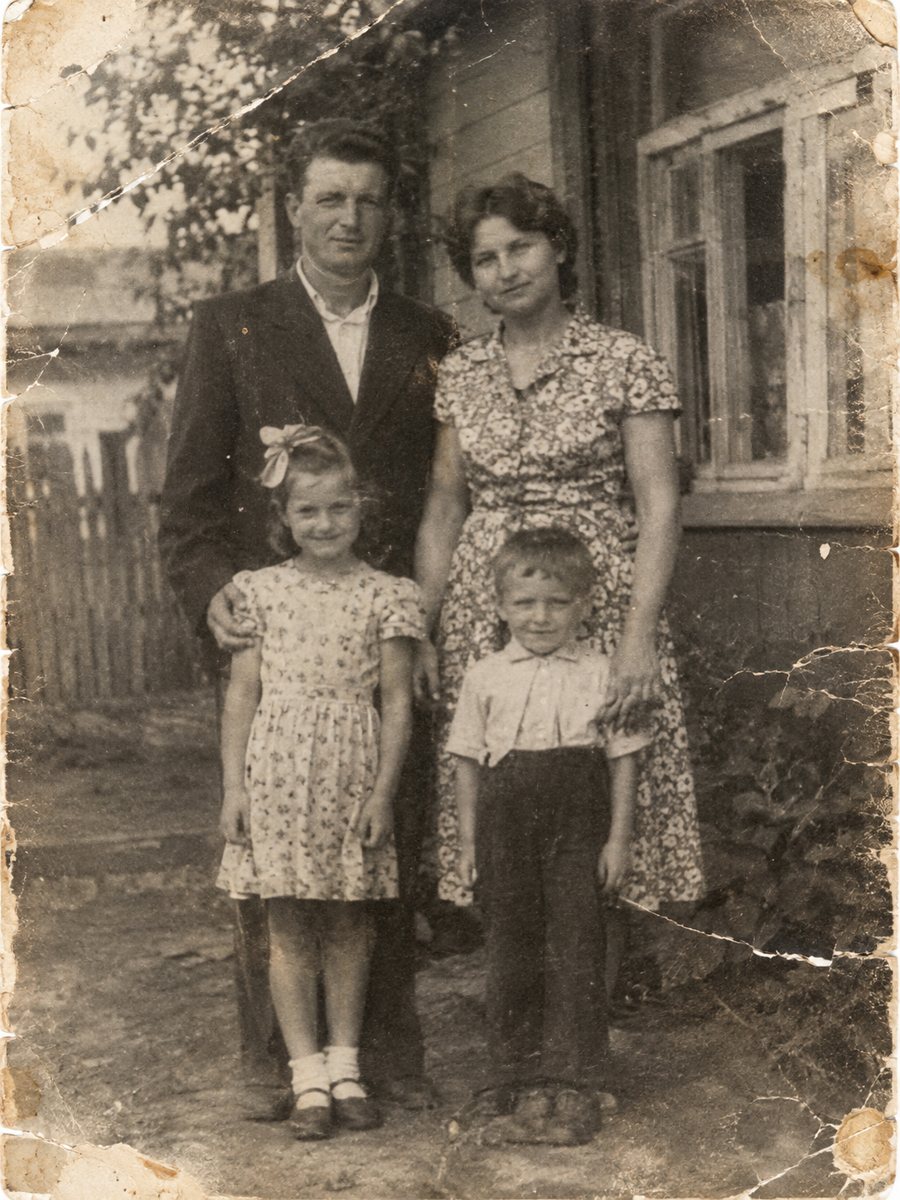
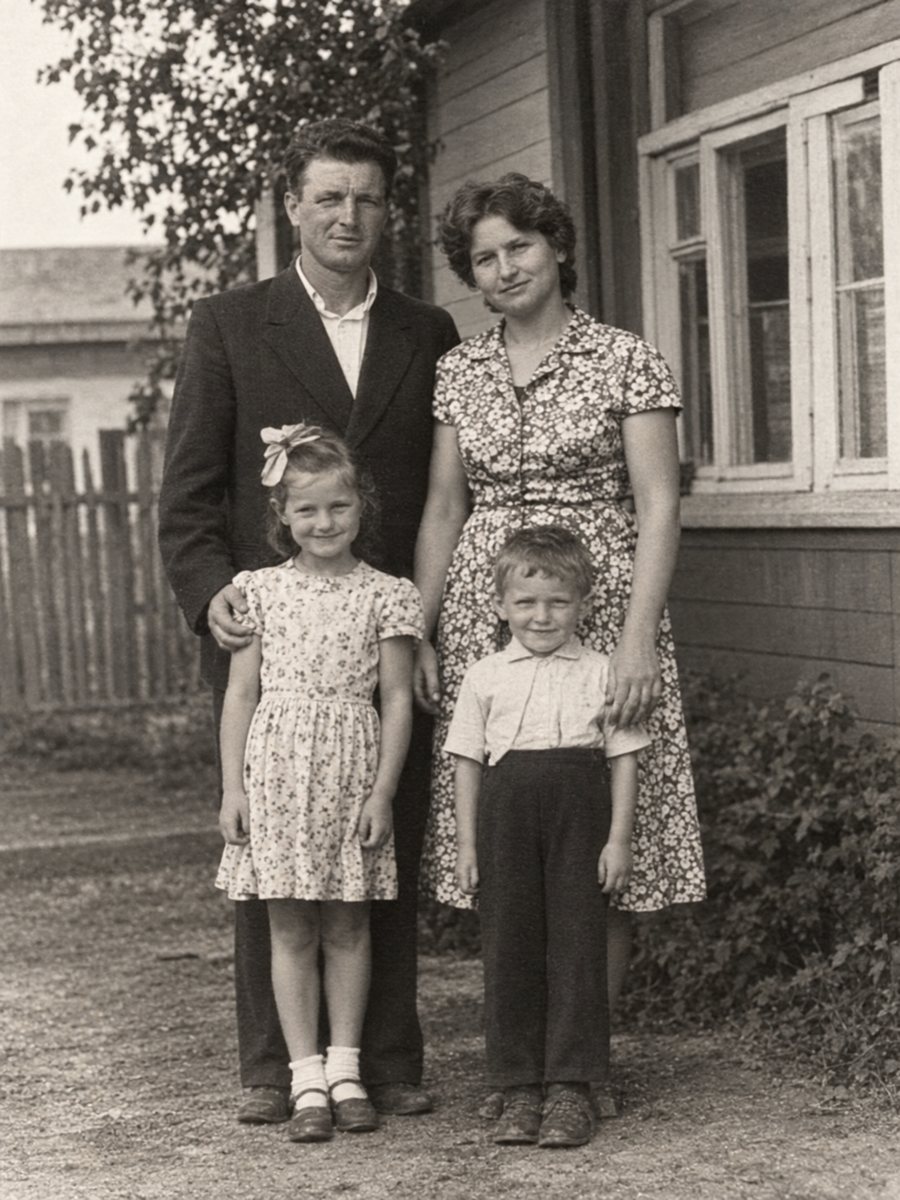 BeforeAfter
In short: Water rings, tide marks and areas where the image has smeared can be cleaned from a clear scan or phone picture of the dried print.
- Where: the VisuMate bot in Telegram, no app or sign-up.
- Cost: 2 credits per image, 7 images free, then packs from 49 Telegram Stars.
- Time: 1 to 2 minutes per image, rerun with a new instruction at the same price.
When you need this
- A box of photos got wet in a basement and the prints have rings and blotches.
- The dye bled so parts of faces look washed out.
- A photo stuck to another and left a rough patch.
How to do it
- 1
Use the button on this page to open the bot in Telegram, then press Start. Your 15 free credits appear on first launch.
- 2
Send the scan or phone picture as a file (document) so Telegram does not compress it. In the caption write: water stains in the upper right, face is washed out, keep original look.
- 3
In 1-2 minutes the repaired photo arrives in the chat. Download it, compare it with the original and run again if a spot was missed.
Try it on your own photo: 7 images are free, no sign-up.
Make it in TelegramDry first, then digitize
Wet prints stick and tear if you rush. Place them between sheets of clean blotting paper, dry them flat at room temperature and only then scan. Photographing a damp print gives glare and distorted tone. A dry, flat print and an even light make the stains readable, which is what the AI needs to separate real image from damage. Keep wet items away from each other, because gelatin surfaces stick together. If prints are already stuck, scan them as they are and avoid forcing them apart.
Where the AI helps and where it guesses
A water ring over a plain wall is simple to repair. Areas where the picture itself washed away, such as half a face, are reconstructed from clues. The result may look right but may not match the person. For a memorial or a framed print, compare it to other photos of the same person and choose the cleanest version. Keep the original scan too, since the AI result is a new image and the scan shows what actually survived.
Tips
- Let the photo dry completely, flat, before you handle it. Never peel stuck prints apart by force.
- Scan or photograph only once the surface is dry, to avoid shine and glare.
- Stains on clothes and backgrounds clean up well. Faces that were washed out are rebuilt by the AI.
- If the photo is valuable, ask a conservator before trying to separate stuck prints.
Questions and answers
Can the bot rescue a photo that is almost blank?
If the faces are gone, the AI can only invent them. Treat the result as an illustration.
Should I scan the photo while it is wet?
No. Dry it flat first.
Does it handle mold as well?
Mold spots are a separate case, see the mold removal page.
Does it stay black and white?
Yes, unless you choose the colorize mode.
More in "Photo restoration"
- Remove mold spots from an old photoDark dots and fuzzy patches from damp storage can be cleaned from a dry, safely handled scan of the print....
- Restore a faded old photoWashed-out gray prints with low contrast regain depth in 1-2 minutes. Send a scan or a phone picture of...
- Repair a torn photoJoin the pieces on a flat surface, take one picture and the AI fills the gap and tear lines so the photo...
- Colorize 1940s photographsColorize 1940s family pictures with natural tones. Hints about clothing, uniforms and rooms in the caption...